ServicesScreen Cleaning & Repair
Window Screen Cleaning & Repair in Isle of Palms
Gray, pollen-clogged mesh dims the view through freshly washed glass, and a single tear lets mosquitoes in. We pull your screens, hand wash them, rescreen the damaged panels and set each one back in its own window. Spring and early fall are good times, before you open the house up.
What screen work covers
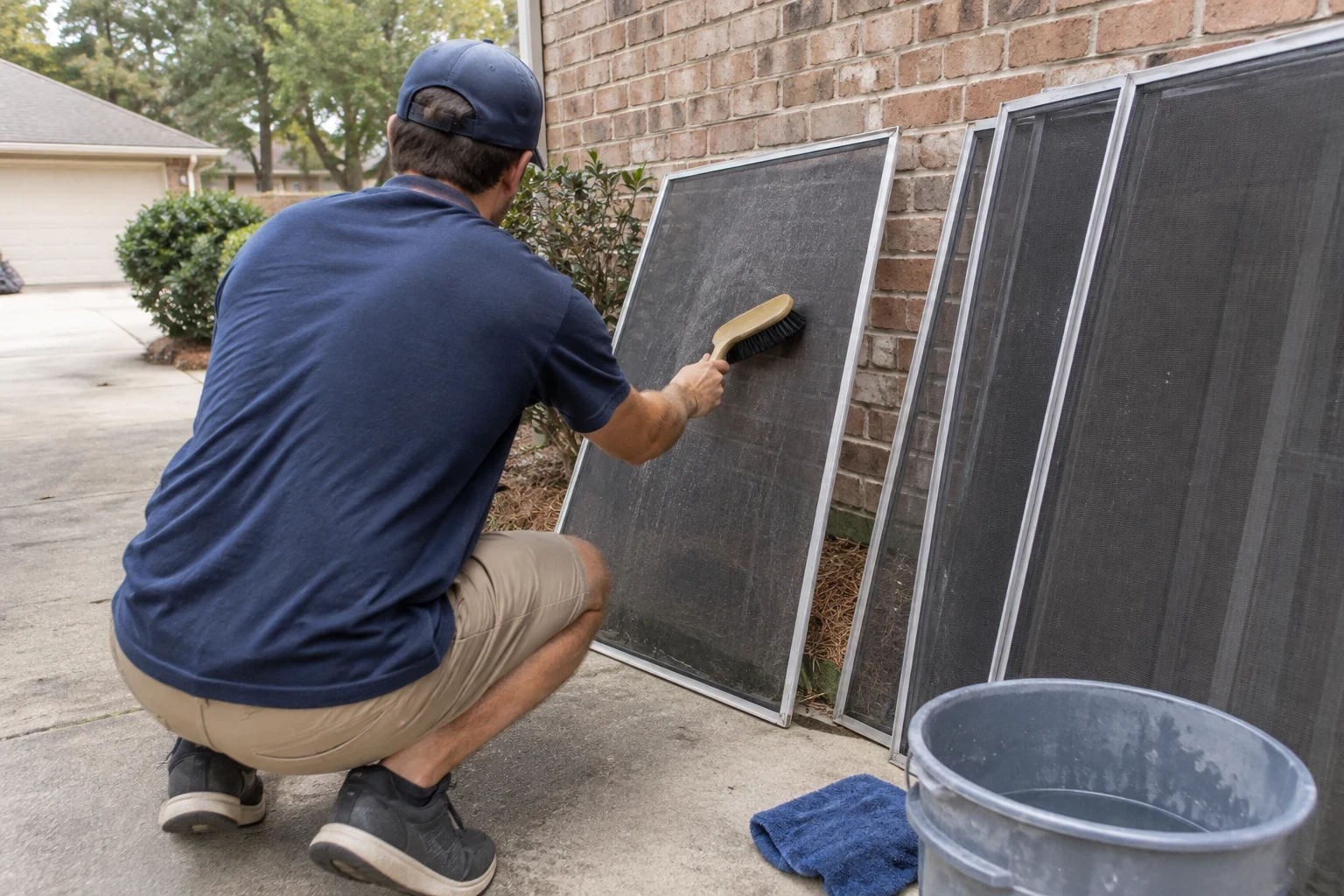
Screens catch everything the wind carries. Pollen, salt film, dust and cobwebs build up in the mesh until the view looks gray and the breeze smells stale. Washing them while they sit in the window just pushes the grime around, so we pull them out and clean them flat.
Some screens need more than a wash. Mesh tears, spline pops out of the channel and frames get bent from being pried out the wrong way. We fix what can be fixed and rescreen what can't, so you end up with a full set that fits and works.
We like to do this work ahead of the open-window months. In the Lowcountry that usually means right after spring pollen settles and again in early fall, when you want fresh air without the bugs.
What we do on a screen visit
- Removal and labeling
- We take each screen out carefully and mark which window it came from. That way every one goes back in the same opening.
- Hand washing
- Screens get a soft brush and a mild soap wash on both sides, then a gentle rinse. We skip high pressure because it stretches mesh and blows spline loose.
- Frame wipe-down
- We clean the frame edges and corners where grime and salt collect. Clean frames slide in and out easier.
- Rescreening torn mesh
- When mesh is torn, sagging or brittle, we replace it with new mesh and fresh spline. We can talk through standard, heavier pet-resistant or other mesh types before we start.
- Small frame fixes
- Loose corners, missing pull tabs and slightly bent frames can often be straightened or fixed. If a frame is too far gone, we tell you plainly.
- Reinstall and check
- Every screen goes back in, seated snug with no gaps at the edges. We check the fit before we pack up.
Signs your screens need attention
A yellow or gray haze
If the view looks dim even after the glass is washed, the mesh is holding pollen and dirt. A wash usually clears it right up.
White crust on the mesh
Salt and moisture leave a chalky film, and on aluminum mesh it can turn into corrosion. Caught early, a cleaning helps. Left too long, the mesh may need replacing.
Holes and tears
Even a small hole lets mosquitoes and no-see-ums inside. Patches rarely hold, so we usually rescreen the panel.
Sagging or loose mesh
Mesh that bellies out or pulls away from the edge means the spline has failed. It is a quick rescreen job.
Screens that won't sit right
Bent frames rattle in the wind, leave gaps or fall out. We can often straighten them, and we'll be honest when we can't.
How the day goes
- 1
We talk on the phone
Tell us how many screens you have, roughly how big they are and whether any are torn. That gives us a fair idea of the job before we show up.
- 2
Take down and look over
We pull and label each screen, then go through them one at a time. Anything that needs repair gets set aside and we walk you through it.
- 3
Wash and repair
We wash the screens outside, away from your plants and doors, and let them dry. Torn or sagging panels get new mesh and spline.
- 4
Back in and cleaned up
Screens go back in their own windows and we check each fit. We rinse off the work area and haul away old mesh and spline.
What moves the price
Screen work is priced by the screen and by what each one needs. A quick wash costs less than a full rescreen. We go over the count and the condition with you on the phone so you know what to expect before we start.
- How many screens
- The number of screens is the biggest factor. Large sliding door screens take more time than small window screens.
- Wash or repair
- A clean set only needs washing. Torn mesh, failed spline and bent frames add labor and materials.
- Mesh type
- Standard fiberglass mesh is the usual choice. Heavier pet-resistant mesh or other specialty mesh costs more to buy and install.
- Reach and access
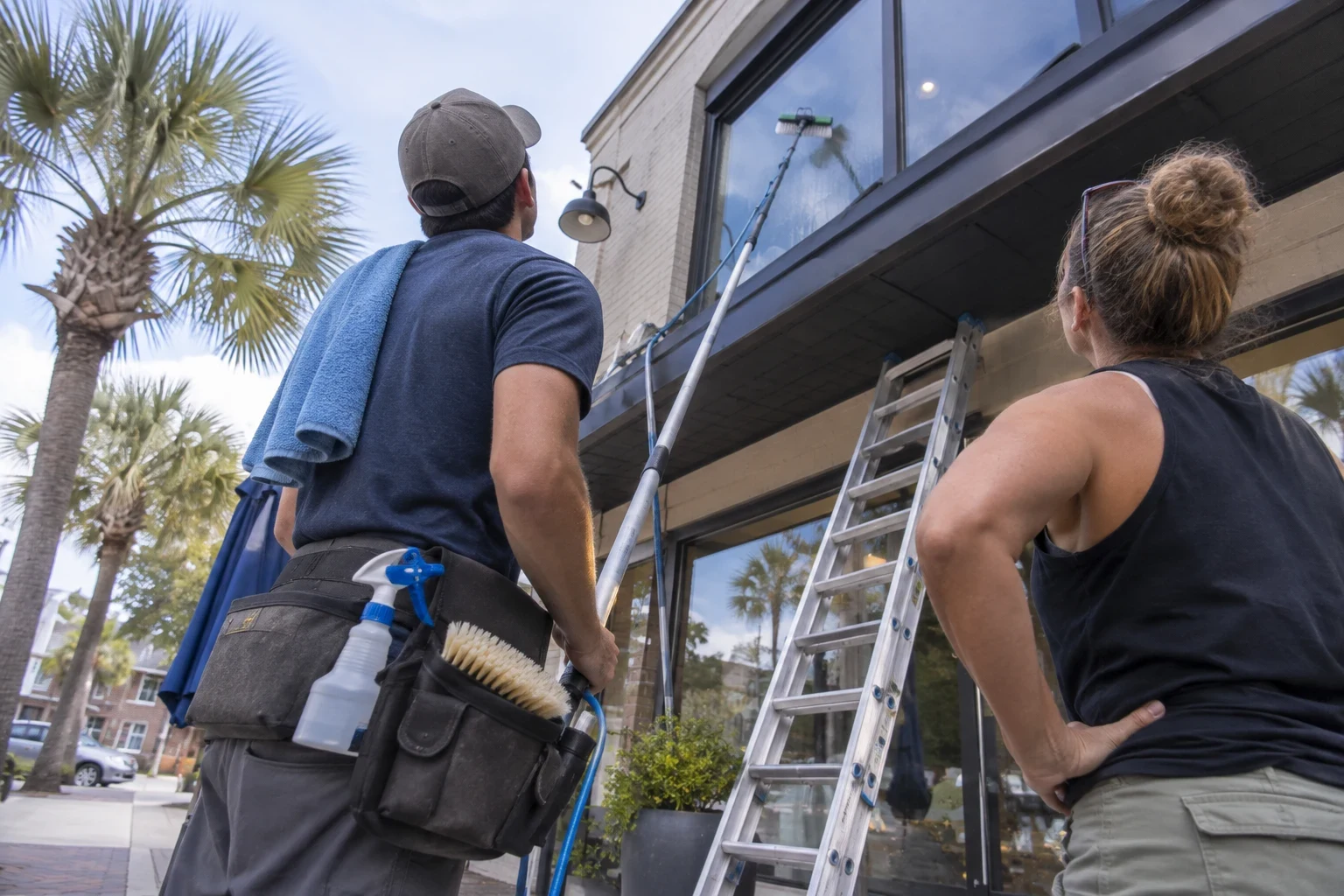
- Second-story screens, screens behind shrubs or ones that have to come out from inside take longer.
- Pairing with other work
- Many people book screens with residential window cleaning or window track and sill cleaning. Doing it all in one visit saves a second trip.
Screen questions we hear a lot
Something not covered here? (843) 905-7631
Can you clean screens without taking them out?
We can brush them in place, but it doesn't do much. Dirt just moves around and drips onto the clean glass. Taking them out lets us wash both sides and get the frames too.
Do you replace the whole screen or just the mesh?
Most of the time just the mesh and spline. If the frame is still straight and solid, rescreening is the simpler fix. We only suggest a new frame when the old one is badly bent or corroded.
I have a dog that claws the slider screen. What should I get?
Pet-resistant mesh is thicker and stands up to paws much better than standard mesh. It's a little darker to look through. We'll show you the difference so you can decide.
How often should screens be cleaned near the beach?
Salt air and spring pollen load up screens fast. Once or twice a year works for most homes, often in spring and again before fall. Screens facing the ocean breeze may need it more.
Will my screens end up in the wrong windows?
No. We label each screen as it comes out and put it back in the same opening. Screens that look alike can be off by a hair, so this matters.
Should I get the windows cleaned at the same time?
It makes sense. Clean screens over dirty glass still look hazy, and the reverse is true too. We can do both on one visit, along with the tracks and sills if they need it.
Have your screens ready before the windows open
Give us a rough count of your screens and mention any that are torn, sagging or bent. We'll go over what each one needs and pick a day that suits you.