What Is the Best Homemade Window Cleaner for Isle of Palms Homes?
The mix is simple and cheap, but how you use it decides whether your glass ends up spotless or streaky.
What is the best homemade window cleaner?
For most windows, the best homemade cleaner is warm water with a few drops of plain dish soap, used with a squeegee and a dry microfiber cloth. Add a splash of white vinegar if you see mineral spots. Near the coast, rinse salt off with plain water first. The tool matters as much as the mix.
What goes in the bucket
Keep it simple. Strong mixes leave more residue, and residue is what you see as streaks once the sun hits the glass. Here are the mixes we would tell a neighbor to try.
Use distilled water if your tap water leaves white spots on your dishes. Those same minerals dry on glass. Mix fresh each time, since a bucket that sat overnight tends to pick up dirt.
- Everyday mix: a gallon of warm water and about a teaspoon of plain dish soap, the kind without lotion or bleach.
- Spot remover: equal parts white vinegar and water in a spray bottle, for hard water marks and sprinkler spots.
- Quick dry: a cup of rubbing alcohol in a gallon of the everyday mix, which helps on muggy days when water dries slowly.
- Rinse only: plain fresh water, for knocking off salt and pollen before you clean.
Why salt and pollen change the job
On the island, the outside of your windows picks up a thin salt film from the ocean air. It looks like haze. If you go straight in with soap and a cloth, you push that salt around and it dries in smears. Rinse the glass with plain water first, then wash.
Spring is the other hard season. Pine pollen settles in a yellow coat on glass, sills and screens. It is fine and a little sticky, so a dry wipe just spreads it. Rinse, wash with the soap mix, then squeegee. If you are cleaning before the pollen is done falling, expect to do the outside again once it stops.
How do you clean windows without streaks?
Work in the shade or on a cloudy day. Direct sun dries the mix before you can pull it off, and that leaves lines. Early morning on the west side and late afternoon on the east side usually works.
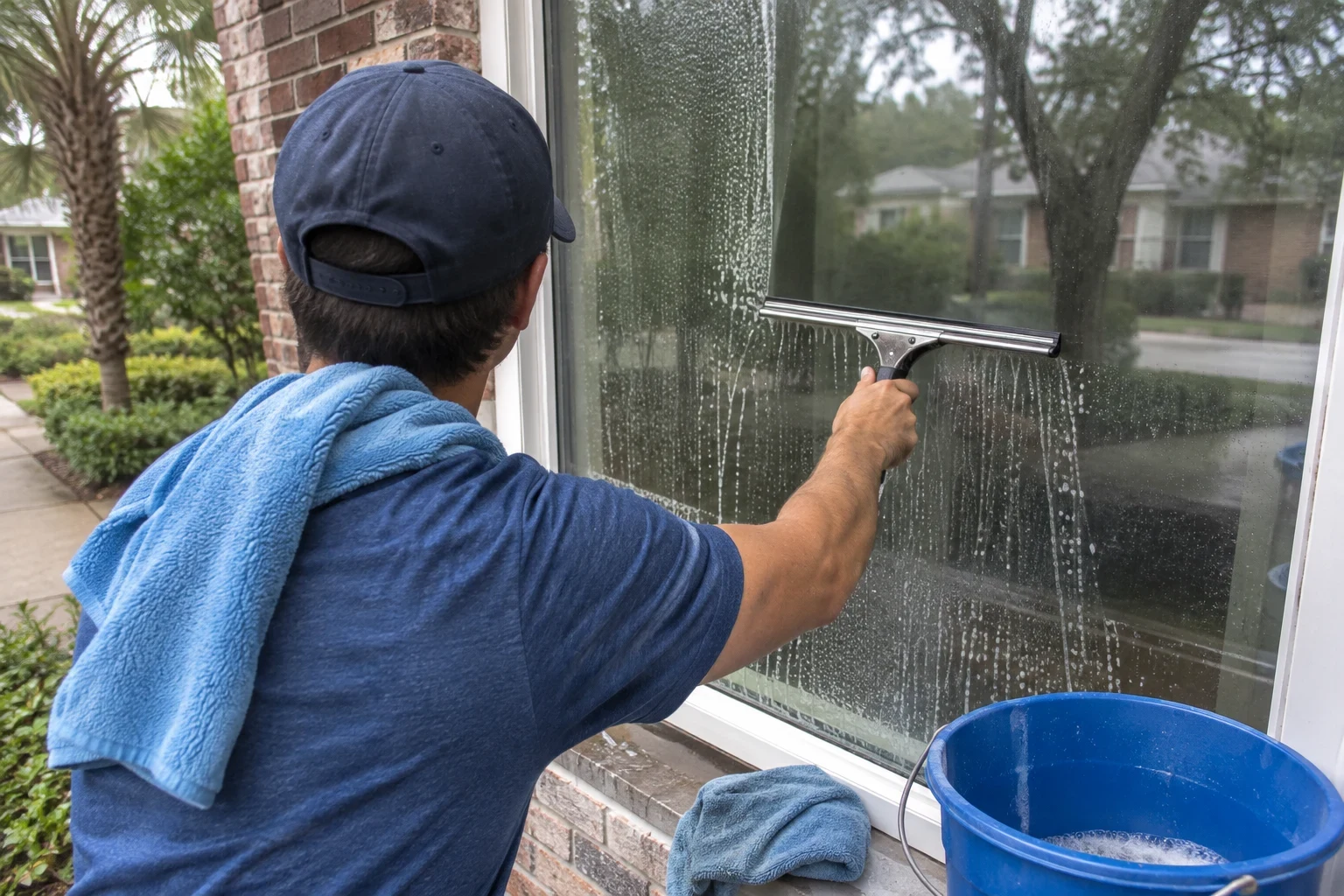
Wet the glass well with a sponge or scrubber. Then pull a squeegee across in one steady stroke, top to bottom, overlapping each pass a little. Wipe the rubber blade with a dry towel after every stroke. That one habit fixes most streaks people complain about.
Finish by running a dry microfiber cloth along the edges and corners where the squeegee can't reach. Check the glass from an angle. Streaks hide when you look straight on.
- Use a squeegee with a clean, sharp rubber blade. A nicked blade leaves a line every pass.
- Change the bucket water when it turns gray.
- Use lint-free microfiber, not paper towels, for detail work.
- Clean screens and tracks first so you aren't dripping dirt onto clean glass.
What to keep off your glass
Some common household products do more harm than good. Skip anything gritty. Scouring powder and the green side of a kitchen sponge can leave fine scratches you will see forever in low sun.
Be careful with vinegar on stone or marble sills, since the acid can dull the surface. Keep bleach away from frames, seals and plants. Don't scrape dry, dirty glass with a razor blade, because sand caught under the blade drags across the pane. And keep a pressure washer away from windows. It can force water past the seals and into the wall.
When it makes sense to hand it off
A homemade mix works fine on first-floor glass you can reach from the ground. It gets harder on raised homes and second stories, where you are working off a ladder with a bucket and a squeegee in hand. Most of our calls come from folks who did the low windows themselves and stopped there.
We do residential window cleaning inside and out, and we can clean your screens and tracks and sills on the same visit. A good time to book is late winter, before pollen, or early fall, after the summer storms have left salt and grit on everything.
More questions about cleaning windows at home
Does newspaper really work for drying windows?
It can, but modern newsprint ink can rub off on frames and hands. A clean microfiber cloth does the same job with less mess.
How often should coastal windows be cleaned?
Homes close to the beach often need the outside done more often than homes inland because of salt spray. Many people clean the outside two to four times a year and the inside once or twice.
Can I clean the inside and outside with the same mix?
Yes. Inside glass usually needs less soap because it only collects fingerprints and dust, so a lighter mix and a quick squeegee is plenty.
Want the high windows done right?
Give us a call and tell us about your windows, screens and gutters. We'll talk through what your home needs before the next season and give you your quote by phone.